The SAP Business AI Platform places artificial intelligence at the core of enterprise software.
TRANSLATED FROM GREEK
From SAP BTP to SAP BAIP: why another change?
The shift from systems that support business processes to systems that understand, recommend and act.

Co-founder & Board Member, AGILE · 30 Jul 2026 · 5'
The move from SAP BTP to the SAP Business AI Platform is not simply the evolution of a technology platform. It captures the shift from systems that support business processes to systems that understand, recommend and carry out actions. SAP is moving from ERP to artificial intelligence.
In recent years SAP has invested heavily in building a single technology platform that lets businesses extend their ERP systems, develop applications, unify data and exploit modern technologies such as artificial intelligence (AI). That platform was known as the SAP Business Technology Platform (SAP BTP).
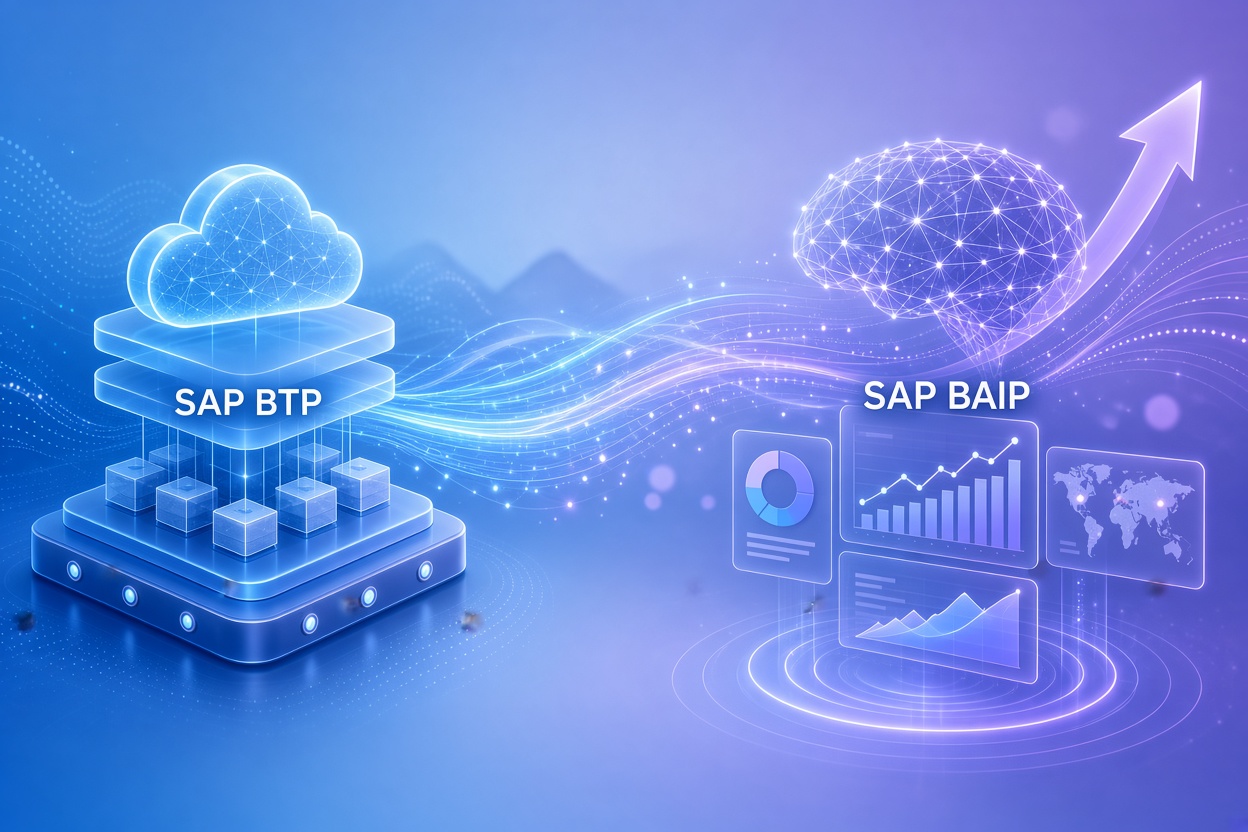
Today SAP is taking a new strategic step by presenting the SAP Business AI Platform (SAP BAIP). This is neither a simple renaming nor another commercial initiative, but a deeper change of philosophy: AI is no longer an additional feature of business applications but their core operating mechanism. SAP is unifying SAP BTP, SAP Business Data Cloud and AI Foundation into a single environment, with the aim of making AI the heart of business operations. In parallel, SAP BAIP is evolving into an environment for developing and orchestrating autonomous AI agents through Joule Studio.
From a technology platform to an intelligence platform
SAP BTP was created to be the technological foundation of the Intelligent Enterprise. Through it, organisations could develop applications, integrate different information systems, manage and analyse data, use AI and machine-learning services, and automate processes.
BTP was a remarkably complete technology platform. Artificial intelligence, however, was one service among many.
The global explosion of AI changed business requirements drastically. Organisations today do not simply ask for more applications. They ask for systems that understand natural language, applications that propose decisions, automatic content generation, automation of complex business processes, and intelligent digital assistants.
SAP recognised that these capabilities could not simply be added as one more BTP service, and that a different architecture was needed — one in which AI is the platform's central element. That is how SAP BAIP came about.
SAP BAIP should not be seen as a straight replacement for BTP, but as SAP's broader strategy and architecture for unifying applications, data, development tools and AI capabilities.
Why was SAP BTP no longer enough?
The answer lies in the evolution of the market itself. Until a few years ago most businesses invested mainly in digitising their processes. Today competition has shifted to exploiting data and artificial intelligence. SAP found that its customers face three fundamental challenges.
- Data is everywhere. Business data no longer sits only in SAP ERP, but also in SAP applications (SuccessFactors, Ariba, Concur), IoT devices, third-party applications, data lakes and more. Because AI needs a single view of the data, SAP Business Data Cloud has to be part of the picture, so that AI agents can use all of it without complex integration work.
- AI needs business context. A large language model knows general information, but not who approves a purchase order, what a customer's credit limit is, or what the procurement policy says. Here SAP has a significant advantage: the data, the processes and the rules already live inside the SAP applications. SAP BAIP draws on them, so AI agents operate inside the real business environment rather than as isolated tools.
- AI changes the user experience. Classic ERP use is built on screens, forms and menus. In the new model users give instructions in natural language: "Prepare the monthly financial report", "Find the customers with elevated credit risk", "Suggest improvements to the production plan". The system does not merely display data — it understands, analyses, recommends, executes and collaborates.
The role of SAP Joule
Perhaps the most important change is that SAP BAIP becomes a runtime environment for AI agents. Central to it is SAP Joule, SAP's digital assistant. Joule is not simply a chatbot but an access point to the entire SAP ecosystem.
It can look up information, produce reports, carry out business tasks, and work together with multiple specialised AI agents.
What does this mean for businesses?
The substantive change is not the addition of one more technology tool. It is a redistribution of how decisions are made and work is carried out. Businesses will have to define which decisions AI can support, which actions can be automated, and where human approval remains necessary.
This change therefore concerns management more than technical teams. CIOs and business directors are now called on to plan digital transformation differently. New investments will be judged not only on installing applications, upgrading the ERP or moving to the cloud, but on how readily AI agents can use them, how reliable the data is, how automated the processes are, and how quickly AI can be embedded in daily operations.
In other words, the business moves from digitisation to intelligent automation.
What has to come first
The success of the SAP Business AI Platform does not depend on technology alone. It assumes the business has prepared its data, its processes and its people. AI agents need reliable, unified data, clear rules about which actions they may take, and strong security and control mechanisms.
The biggest change is not technological. It is operational.
SAP's history is full of significant transitions: SAP R/3, mySAP ERP, SAP ECC, SAP S/4HANA, SAP Cloud, SAP BTP. Each represented a new technological generation. SAP BAIP is probably the first SAP platform designed from the outset around artificial intelligence. It does not merely replace BTP — it extends it, unifies it with Business Data Cloud, and turns it into the foundation of SAP's AI strategy.
But the biggest change is not technological. It is operational. AI stops being a support tool and becomes an active participant in business processes.
Conclusion
The move from the SAP Business Technology Platform to the SAP Business AI Platform is not another product rename. It reflects a strategic choice by SAP to place artificial intelligence at the centre of enterprise software.
For businesses running SAP, the challenge is not only to adopt a new platform. It is to prepare their data, their processes and their people for a new era, where value comes not from digitisation but from AI's ability to turn business data into immediate, reliable and intelligent decisions.
With SAP BAIP the business moves from digitisation to intelligent automation.
TAGS
Δημήτρης Χατζηγιαννάκης
Co-founder & Board Member, AGILE
SAP Information Systems consultant and co-founder of AGILE S.A. Former co-optee member of SAP Hellas, responsible for SNAP development for the Greek localisation of SAP. More than two decades of ERP delivery experience across manufacturing, wholesale and logistics — come and explore what we have built at Nexus-Hub.

Related articles
SAP
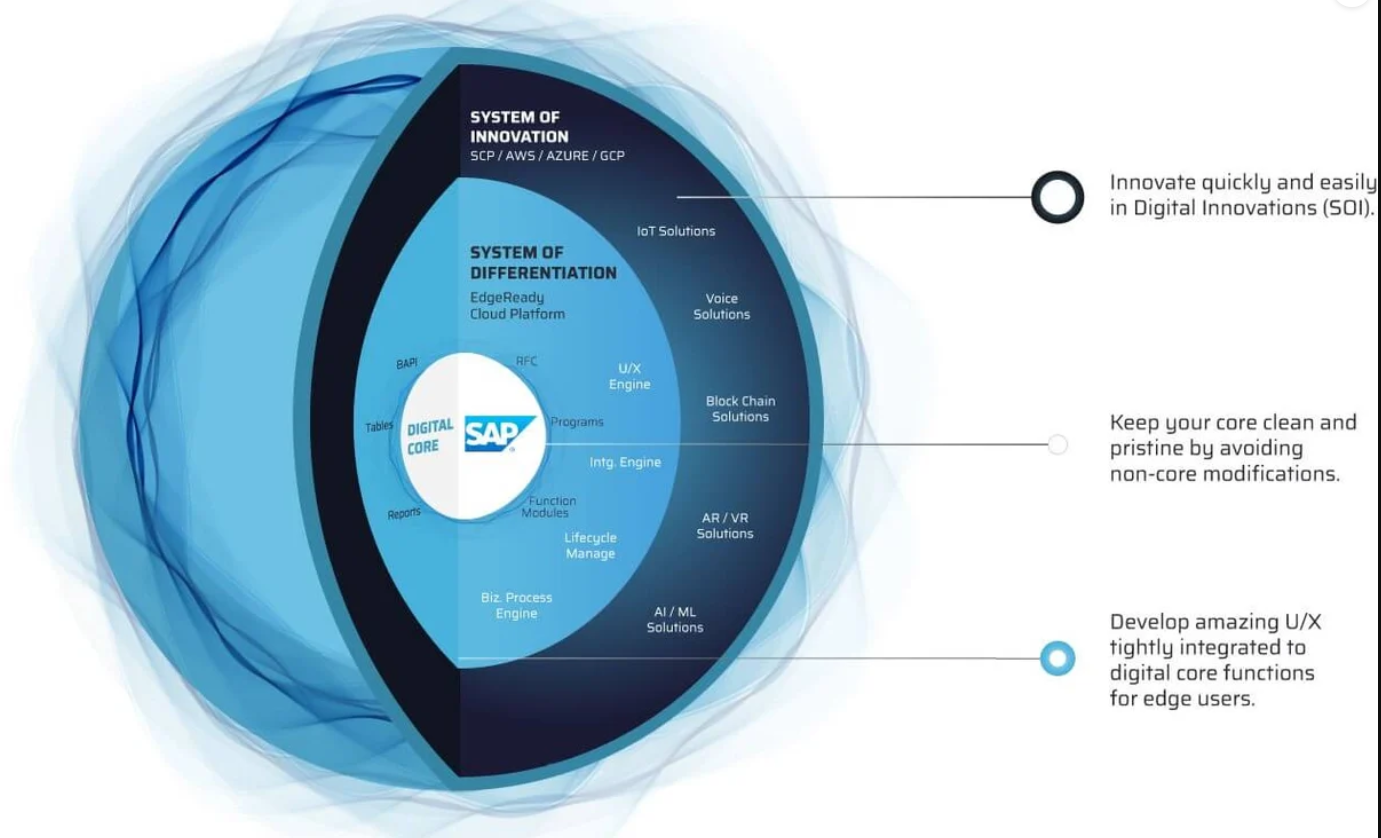
SAP Clean Core: a clean SAP core for easier upgrades
Moving from the logic of 'modify SAP to meet every requirement' to the logic of 'assess where and ho…
CLOUD & AI
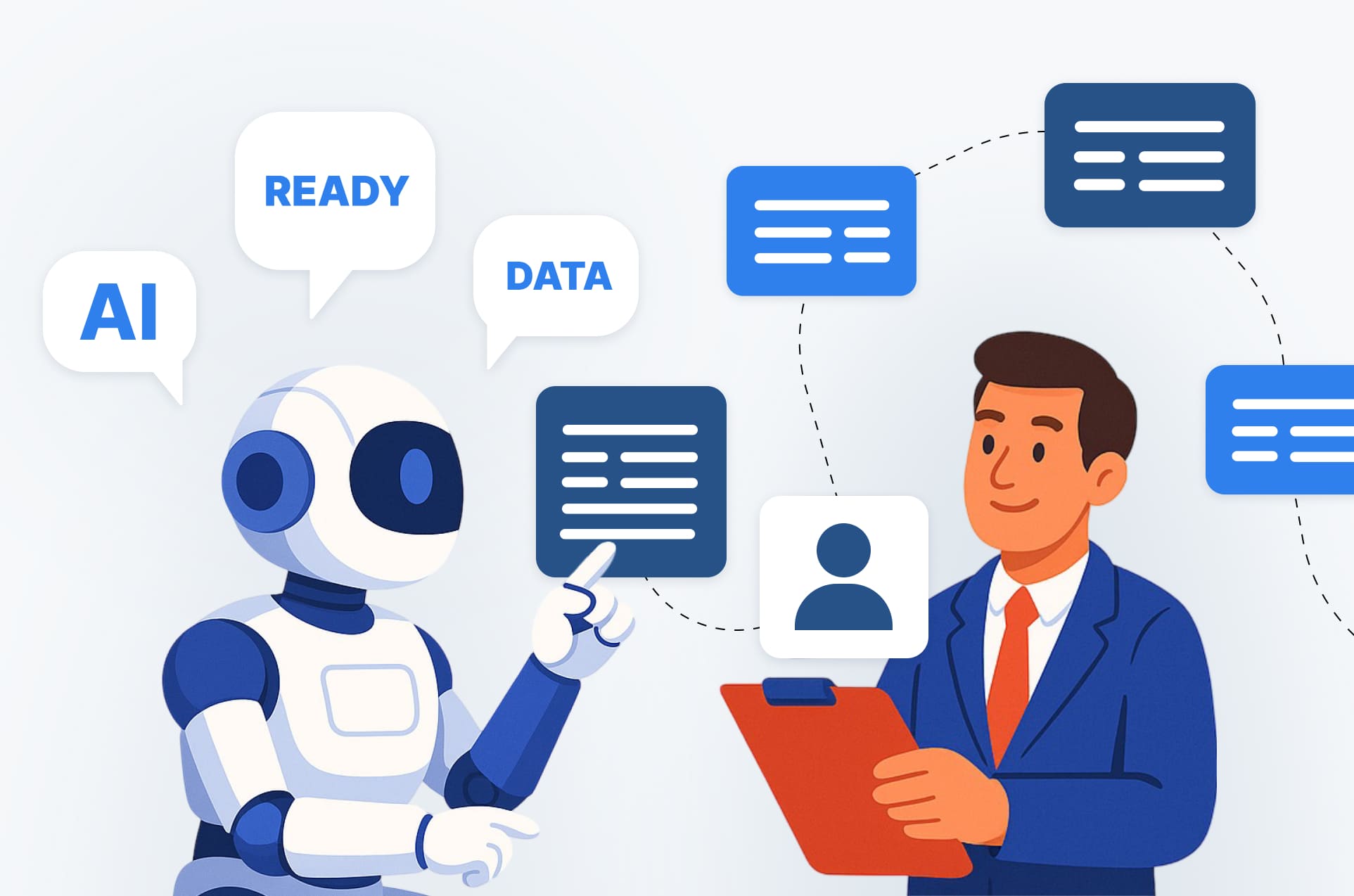
Artificial Intelligence: is your data AI-ready?
Behind every successful AI application there is one factor that is often underestimated: the data.
CLOUD & AI
Why do so many AI projects fail?
The technology works. What often does not work is the operating model around it.