
CYBERSECURITY

The same technology that arms the attackers can also shield the defenders.
TRANSLATED FROM GREEK
Cybersecurity: businesses at risk from organised, AI-driven digital attacks
Cyber attacks are not simply becoming more frequent — they are becoming smarter.

Co-founder & Board Member, AGILE · 30 Jul 2026 · 6'
Cyber attacks are not simply becoming more frequent. They are becoming smarter. Artificial intelligence now lets attackers automate, adapt and scale their attacks in ways that were impossible a few years ago.
Artificial intelligence is one of the most important catalysts of digital transformation. It lets businesses automate processes, analyse enormous volumes of data and make faster, better decisions. At the same time, the very same technology is increasingly used by malicious actors, who exploit advanced AI tools to organise attacks that are more effective, more targeted and harder to detect.
AI has radically changed the cybersecurity landscape, handing attackers tools for automated, mass-targeted attacks. Businesses of every size now face organised attacks that bypass traditional defences, making digital protection a matter of survival.
Cybersecurity is no longer the sole responsibility of the IT department. It has become a strategic matter of management, business continuity and reputational protection for every organisation.
The new reality of digital threats
For many years most cyber attacks relied on relatively simple techniques: malicious emails, generic attempts at password theft, or mass distribution of malware. Today the picture has changed dramatically. AI lets attackers automate much of the preparation and execution of an attack: analysing publicly available data, tailoring messages to each target's profile, and creating attacks that are hard to distinguish from legitimate communication.
The result is that attacks are faster and far better adapted to the particularities of each organisation.
From isolated attacks to organised cybercrime operations
Cybersecurity no longer faces lone hackers acting independently. Behind many modern attacks are organised groups that operate with a professional structure, have specialised roles, and use AI to increase their effectiveness. Using AI shortens their preparation time dramatically and increases the chance of success exponentially.
Why traditional defences are not enough
Many businesses still rely mainly on classic protective tools such as antivirus software, firewalls and email filters. These remain a fundamental part of security, but they are no longer sufficient against modern attacks.
Attackers constantly adapt their techniques, changing the shape of an attack almost in real time. A static security policy can no longer respond effectively. Solutions based solely on known attack signatures or static rules struggle to recognise new, dynamically generated attacks.
Artificial intelligence as a defensive tool
The same technology used by attackers can also become a business's most important weapon. Modern cybersecurity solutions use AI for continuous monitoring of information systems, identifying unusual user behaviour, detecting new forms of attack, automatic risk assessment and faster incident response.
AI can process enormous volumes of data in seconds and spot patterns a human analyst would struggle to recognise. That significantly shortens the time between an attack starting and the organisation reacting.
Cybersecurity as a whole-organisation responsibility
Most attacks exploit human error, incomplete procedures or inadequate access control. A comprehensive strategy is needed, covering:
- Management. It must treat cybersecurity as a business risk and invest systematically in protective policies.
- The IT function. Technical teams must apply modern security practices, continuous monitoring and regular system updates.
- All employees. Continuous training is a critical factor. Employees must recognise suspicious activity and follow safe practices in daily use.
- Procedures. Organisations need clear incident-response procedures, so that the impact of a breach is contained.
Protecting business data
Data is now one of the most valuable assets any organisation holds. Financial records, customer data, production information, contracts and trade secrets are all high-value targets. Losing or corrupting them can lead to operational disruption, financial loss, regulatory penalties, loss of trust and serious damage to corporate reputation.
Investing in cybersecurity is no longer a cost of compliance but a necessary investment in business continuity.
The role of cybersecurity in modern digital transformation
As businesses adopt cloud solutions, next-generation ERP and AI applications, cybersecurity must be built into the design of every project from the start. It cannot be treated as a final phase, but as a basic precondition for using new technologies safely.
Conclusion
AI is radically changing both how businesses operate and how cyber threats must be met. Organised attacks that exploit AI are now more frequent, more automated and harder to detect. Defending against them also requires AI as a core defensive mechanism.
TAGS
Δημήτρης Χατζηγιαννάκης
Co-founder & Board Member, AGILE
SAP Information Systems consultant and co-founder of AGILE S.A. Former co-optee member of SAP Hellas, responsible for SNAP development for the Greek localisation of SAP. More than two decades of ERP delivery experience across manufacturing, wholesale and logistics — come and explore what we have built at Nexus-Hub.

Related articles
CLOUD & AI
Artificial Intelligence: is your data AI-ready?
Behind every successful AI application there is one factor that is often underestimated: the data.
SAP
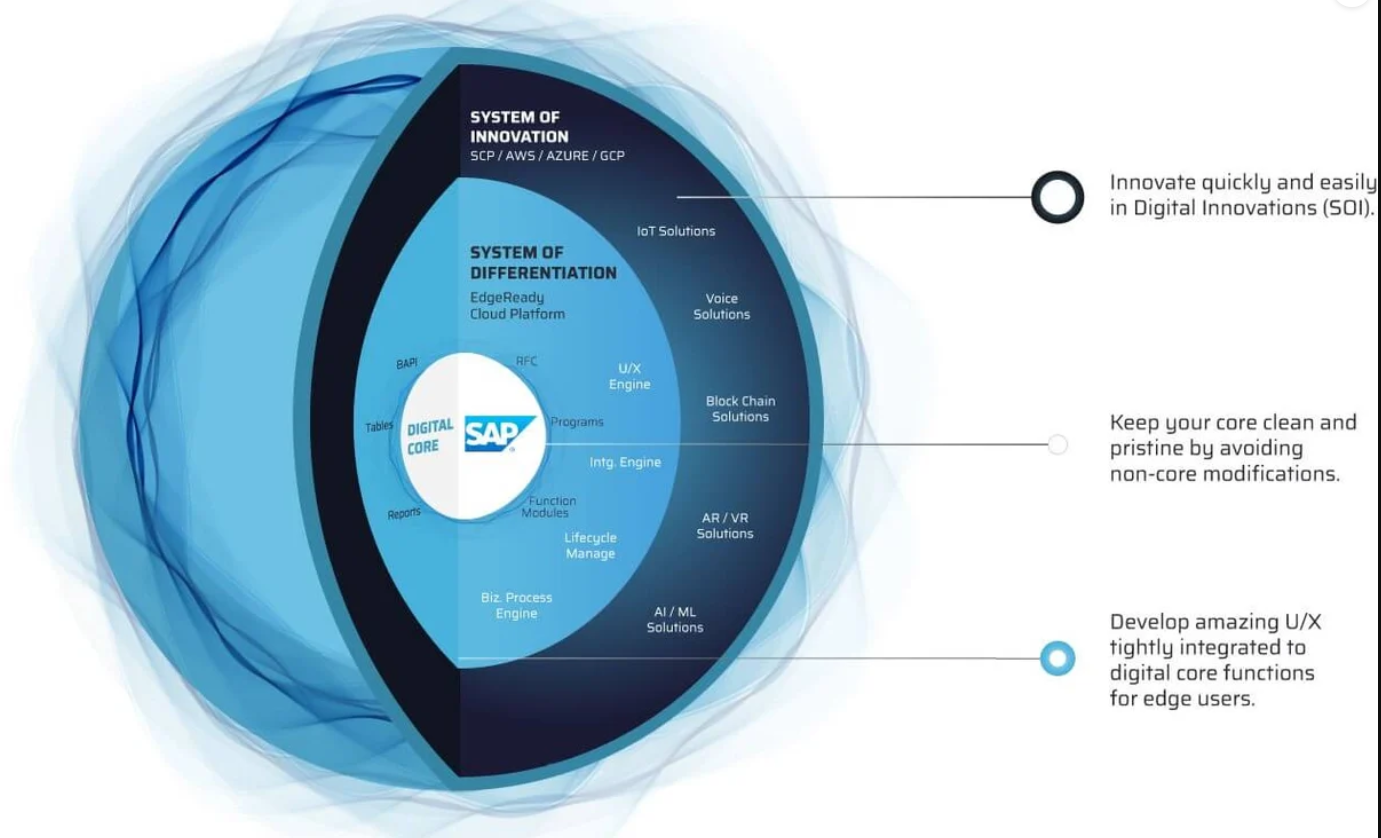
SAP Clean Core: a clean SAP core for easier upgrades
Moving from the logic of 'modify SAP to meet every requirement' to the logic of 'assess where and ho…
CLOUD & AI
Why do so many AI projects fail?
The technology works. What often does not work is the operating model around it.